








How AI Computer Vision is Revolutionizing Quality Control in Factories
Traditional quality control (QC) relies on human inspectors, a process that is slow, subjective, prone to fatigue, and incapable of keeping pace with modern high-speed production lines. AI Computer Vision (CV) is transforming this critical manufacturing function by enabling machines to interpret visual data (images, video) with superhuman speed and accuracy. This automation ensures consistent, objective, and round-the-clock product quality.
I. Computer Vision Techniques for Quality Control
Industrial CV models are trained to perform highly specialized tasks that far surpass the capabilities of traditional fixed-rule inspection systems.
1. Anomaly Detection and Defect Classification
Anomaly Detection models are trained on images of perfect products and automatically flag any deviation—even tiny scratches, cracks, or surface irregularities—as a potential defect. More advanced models use classification to categorize the type of flaw (e.g., classifying a flaw as a scratch, dent, or contamination), providing actionable data for process improvement.
2. High-Precision Feature Inspection and Gauging
CV models can perform non-contact dimensional inspection, acting as highly accurate digital gauges. By processing images, they can verify if key features (e.g., bore hole diameter, component placement, thread integrity) comply with strict engineering tolerances, which is vital for Computer Vision in precision manufacturing.
3. The Role of Edge AI
To keep up with conveyor belt speeds, QC inspection must occur in milliseconds. This necessitates placing the processing power (GPUs) directly on the factory floor near the cameras, utilizing Edge AI to enable real-time decision-making without the latency of cloud communication.
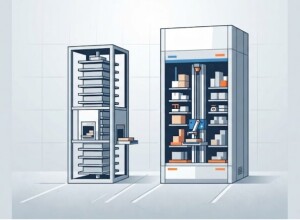
[Image illustrating a Computer Vision Quality Control setup with a camera array, high-speed lighting, and edge processor]
II. Implementation and Training Data
Deploying a robust CV QC system requires a strategic focus on image acquisition and data preparation.
1. Data Annotation for Training
The foundation of any accurate CV model is the training data. Human experts must use Data Annotation to meticulously label, draw bounding boxes around, or segment every known defect type in thousands of images, teaching the model what to look for and where to look.
2. Integration with Automation and Robotics
Once a defect é identified, the system must act immediately. CV is often integrated with robotics to enable automated sorting and rejection of faulty parts, or to guide AI-Powered Cobots to perform secondary inspection or rework tasks.
III. Strategic Advantages for Manufacturers
Moving from manual or basic machine vision to AI-driven CV delivers significant competitive benefits.
1. Achieving Zero-Defect Manufacturing
AI's ability to monitor 100% of production with high consistency eliminates the statistical risks associated with sample-based human inspection. This leads directly to a reduction in faulty products reaching the market and lower warranty costs.
2. Cost Reduction and Immediate Feedback Loop
Automated QC reduces labor costs associated with inspection and significantly cuts down on material waste. Crucially, the AI provides real-time data on where and when defects are occurring, allowing engineers to instantly adjust upstream processes to correct the root cause, rather than just rejecting the output.
Conclusion
AI Computer Vision is no longer a niche technology but a mandatory component for modern manufacturing striving for efficiency and quality. By delivering speed, objectivity, and total coverage, CV transforms quality control from a cost center into a powerful optimization tool, ensuring the highest standards of production while dramatically lowering operational costs.
Navigation
Explore related topics on the infrastructure and applications of AI in industry: