










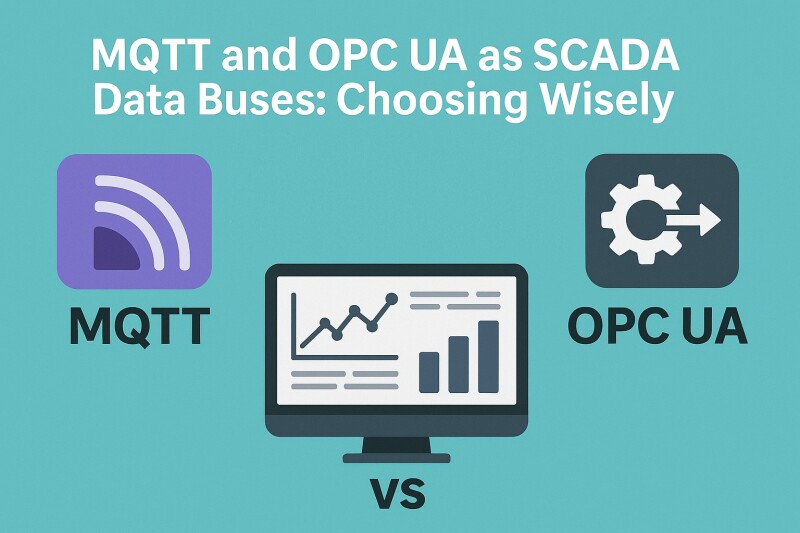
MQTT and OPC UA as SCADA Data Buses: Choosing Wisely
Both MQTT and OPC UA are critical to modern SCADA architectures — but they solve different problems. Selecting the right protocol (or combination) can determine how scalable, secure, and maintainable your data layer becomes.
Philosophy and Architecture
- OPC UA: A structured, object-oriented framework designed for industrial interoperability.
- MQTT: A lightweight publish/subscribe transport optimized for remote and bandwidth-constrained devices.
When to Use OPC UA
- Need for rich metadata and standardized information models.
- Integration with PLCs and industrial devices that already speak OPC UA natively.
- Security and discovery built-in (encryption, certificates, browsing).
When to Use MQTT (Sparkplug B)
- Many devices publishing small payloads over unreliable networks.
- Cloud integration and data aggregation at enterprise level.
- Decoupling between producers and consumers — event-driven architecture.
Best of Both Worlds
Hybrid systems use OPC UA at the edge and MQTT Sparkplug B to bridge to the cloud. Several gateways now convert data bi-directionally, allowing legacy assets to participate in modern UNS frameworks.
Case Example: Multi-Site Manufacturer
A company standardized OPC UA within each plant and used MQTT to publish data to an enterprise broker. This reduced configuration complexity and achieved near real-time multi-site visibility.
Related Articles
- Cloud-Connected SCADA: Security, Latency, and Cost
- Historian to Data Lake: A Safe Migration Path
- SLA Design for Remote Plants and Utilities
Conclusion
There’s no single winner between MQTT and OPC UA — they’re complementary. OPC UA defines structure and meaning; MQTT delivers speed and scale. Together, they form the backbone of modern SCADA data strategies.
























Interested? Submit your enquiry using the form below:
Only available for registered users. Sign In to your account or register here.